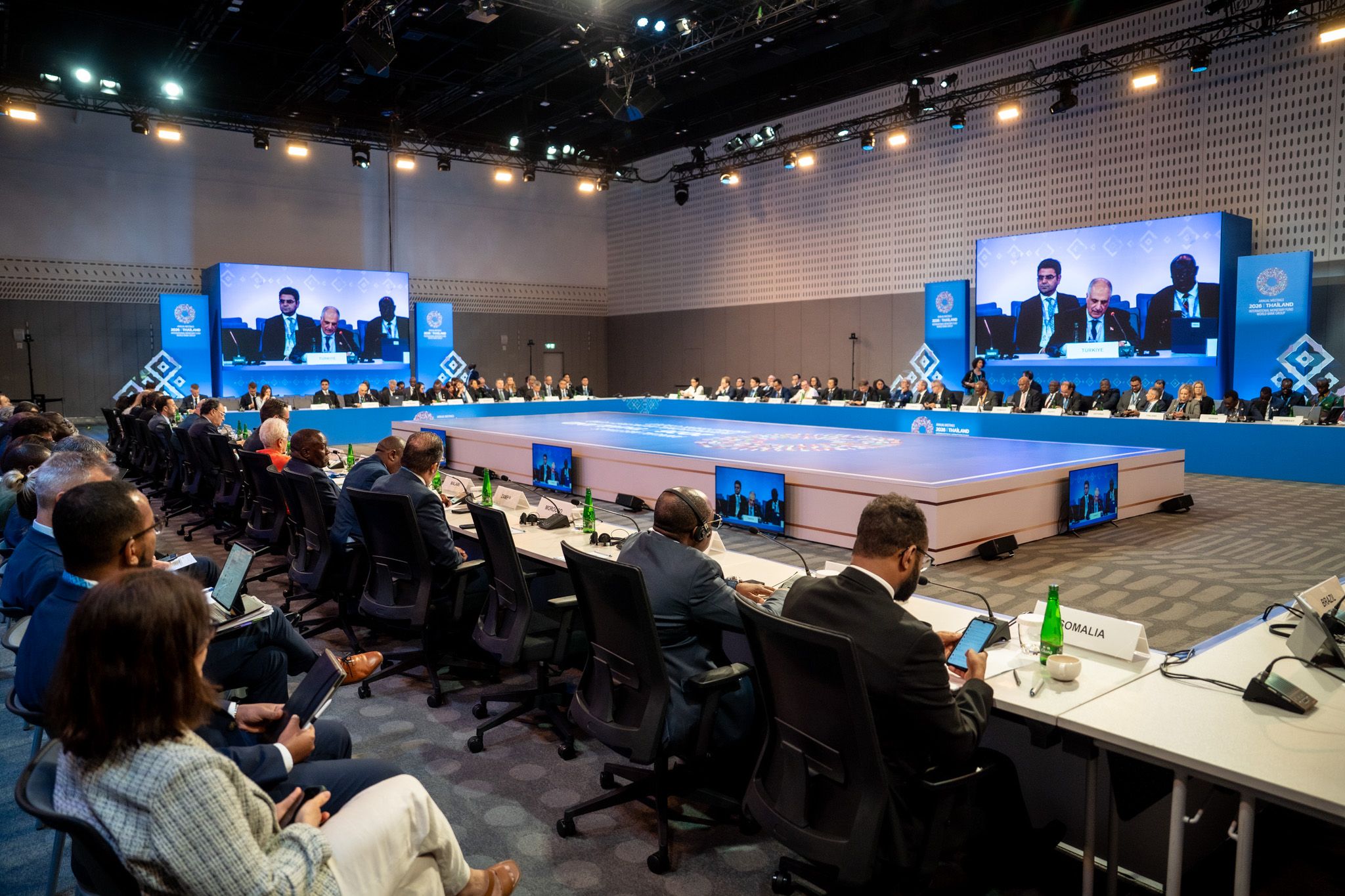






The Coalition of Finance Ministers for Climate Action brought together more than 300 participants in person and online, representing 70 countries and more than 40 organizations during the 2026 World Bank Group–IMF Annual Meetings in Bangkok for a week of discussions focused on a central question: how can Finance Ministries navigate immediate economic and fiscal pressures while continuing to invest in resilient, competitive and sustainable economies?
The Coalition connected discussions on macroeconomic and fiscal resilience with practical implementation, private capital mobilization, nature, regional cooperation and country-level experience. The program reflected the Coalition’s growing focus on moving from policy ambition to implementation and identifying practical solutions that Finance Ministries can adapt to their own national circumstances. The Coalition’s post-AM26 review highlighted particularly substantive country interventions, with participants sharing implementation steps, lessons learned and specific areas where further Coalition support could add value.
Connecting fiscal resilience, investment and implementation
The week opened with discussions on one of the most persistent challenges facing Finance Ministries: how to finance resilience and sustainable growth when fiscal space is constrained. Through the Xingu Finance Talks, participants explored approaches to expanding fiscal space for climate investment and reducing the cost of capital, including through guarantees and risk-sharing mechanisms.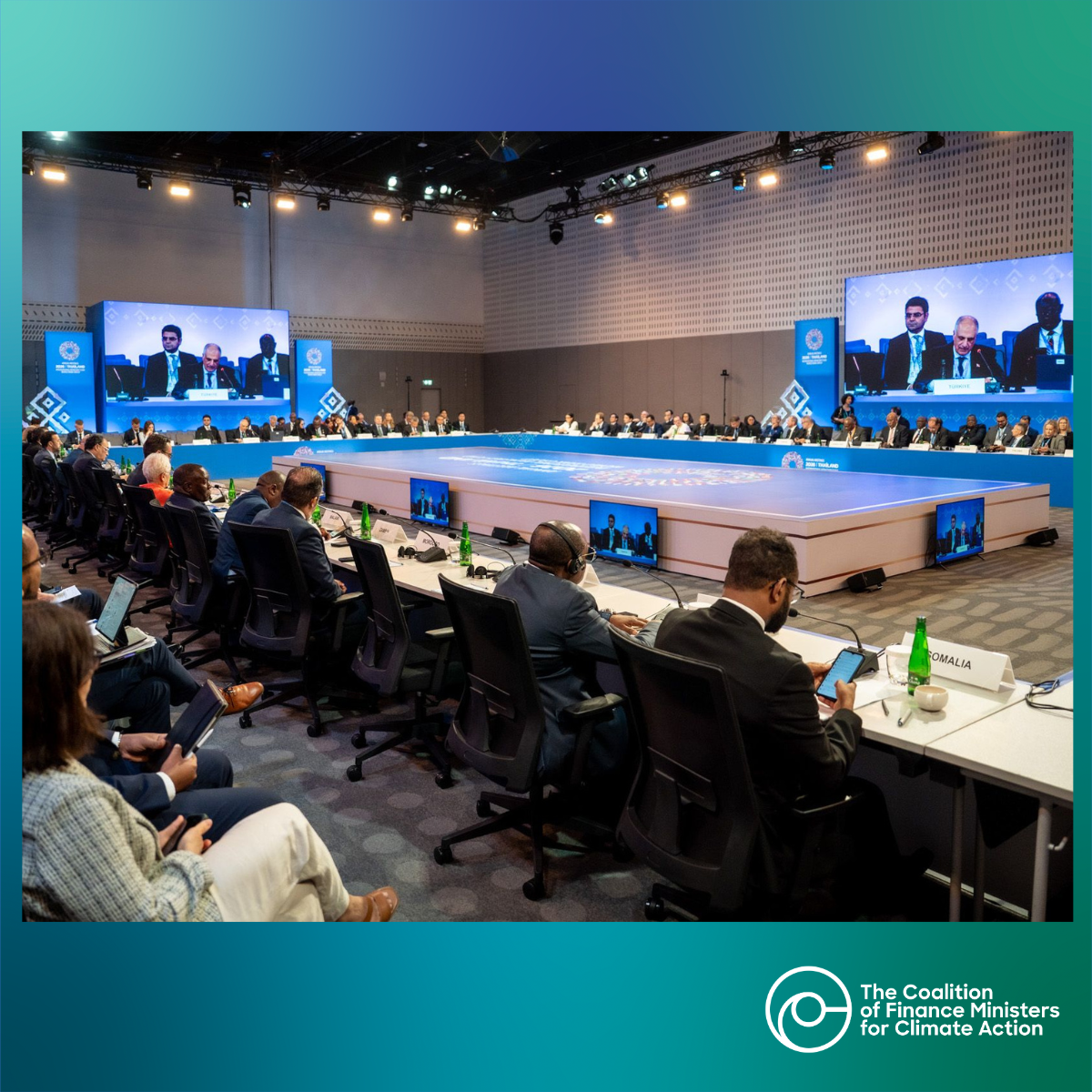
The Asia-Pacific Regional Dialogue on Climate Fiscal Resilience and Climate Finance, organized with the Asian Development Bank, brought another dimension to the implementation challenge. Representatives from Finance Ministries across the region emphasized that the challenge is increasingly not a lack of climate plans, but translating priorities into costed, finance-ready investments and embedding climate considerations into routine fiscal, budget and public investment decisions.
Discussions underscored how climate shocks can create a “double fiscal squeeze”, increasing emergency expenditure while simultaneously reducing government revenues. Participants also highlighted persistent barriers to adaptation finance, particularly for SIDS and LDCs, and the need to strengthen project preparation, investment pipelines, climate-responsive public financial management and institutional capacity within Finance Ministries.
Other engagements broadened the conversation. From Budgets to Biodiversity examined experiences from Brazil, Costa Rica, Indonesia, and Nigeria, and how nature considerations are being integrated into budgeting, public finance, and economic decision-making. At a workshop co-organized with UNEP FI and OECD, participants explored practical examples of insurance, guarantees, local-currency financing and risk-sharing structures that can help mobilize private investment for clean energy and adaptation.
Finance Ministers at the center of the discussion
At the heart of the week was the 16th Ministerial Meeting "Preserving Macroeconomic Stability and Financing Resilience and the Green Transition in the Face of Energy Price Shocks", the discussion centered on a difficult set of choices facing Ministries of Finance: how to respond to immediate pressures from energy price shocks, constrained fiscal space and elevated financing costs while continuing to invest in longer-term resilience, energy security and the transition. Participants emphasized that support to households and businesses during shocks needs to be carefully targeted and time-bound, while preserving fiscal sustainability and incentives for longer-term adjustment.
The discussion also highlighted the close links between energy security, competitiveness and macroeconomic resilience. Energy diversification, efficiency, electrification, and renewable energy were considered not only through the lens of climate objectives but also as ways to reduce economies’ exposure to volatile energy markets. With public budgets unable to meet investment needs alone, participants also stressed the importance of predictable policy and regulatory frameworks, credible investment pipelines, guarantees, blended finance and risk-sharing mechanisms to help mobilize private capital. Better modelling, data and scenario analysis were highlighted as important tools for Ministries of Finance navigating increasingly complex policy trade-offs. Check the Minister's Quotes here.
The Ministerial also anchored two major Coalition outputs: the fourth Climate Action Statement and the launch of the consultation process for the updated Coalition Flagship Guide. The Climate Action Statement brings together emerging priorities, practical lessons and approaches from Coalition members, while the Guide consultation is designed to draw on country experience and member feedback to develop a practical resource for Ministries of Finance. The conversation on implementation continued through the Post-Ministerial Deputies’ Dialogue, where members exchanged country experiences, challenges, and lessons, and provided input on the evolving technical content and recommendations of the updated Guide.
A joint capacity-building workshop hosted by the Coalition, GFANZ and GCBC brought the implementation discussion to the institutional level, focusing on governance arrangements for country platforms. Using a fictional country case study, participants from Finance Ministries and the wider country-platform ecosystem explored how governments can design governance structures that bring together the institutions needed to identify priorities, address barriers to investment and mobilize capital.
A key question was how the function and form of a country platform should evolve together. Discussions highlighted the importance of strong coordination across government and flexible governance arrangements that can adapt as platforms move from defining priorities toward implementation. Participants also emphasized the growing role of sector ministries, alongside the Ministry of Finance and other economic institutions, once investment priorities and barriers become clearer.
The week concluded with the Ministerial Breakfast: Doing More with Less: Scaling Private Investment for Transition and Adaptation, which explored the practical role of Finance Ministries in creating the policies, institutions and investment environments needed to attract greater private investment. Discussions considered how public and development finance can be used strategically to crowd in private investment, alongside regulatory and sustainable finance frameworks that support transition and adaptation priorities.
Key takeaways from Bangkok
Implementation is increasingly the central challenge. Countries have developed strategies and plans, but the focus is shifting toward translating priorities into fiscal decisions, investable projects, financing strategies and institutional arrangements that can deliver results.
Finance Ministries are navigating difficult short-term and long-term trade-offs. Energy price shocks, constrained fiscal space and financing pressures are forcing governments to balance immediate support for households and businesses with fiscal sustainability and longer-term investment in energy security, resilience and the transition.
Climate risks are increasingly fiscal and macroeconomic risks. The Asia-Pacific Dialogue highlighted how climate shocks can simultaneously increase expenditure, reduce revenues and weaken fiscal and debt sustainability, reinforcing the importance of integrating climate risk into core macro-fiscal and public financial management processes.
Mobilizing investment requires more than finding additional public finance. Discussions repeatedly returned to how Ministries of Finance can use scarce public and development resources strategically, while strengthening policy and regulatory frameworks, investment pipelines and risk-sharing mechanisms that can help mobilize private capital.
Institutions matter for implementation. The country-platform workshop showed how governance structures need to evolve with national priorities, bringing together central economic institutions and sector ministries as countries move from strategic coordination toward investment and delivery.
Peer learning is becoming more practical. Across the week, countries were not simply presenting ambitions. They were exchanging experience on concrete implementation challenges, from accessing adaptation finance and managing fiscal risks to creating investment pipelines and designing institutions capable of delivering them.
What comes next
The conversations in Bangkok will continue through the Coalition’s work program.
The consultation on the first tranche of the updated Flagship Guide remains open until 30 November 2026, providing members and stakeholders with an opportunity to contribute experience, evidence and practical examples to its continued development.
Contribute through the consultation form
Explore the consultation draft on the interactive website and share your feedback
Read the two-page summary for policymakers.
The Coalition is also carrying key themes from Bangkok into COP31, with planned engagements addressing cross-government action for economic transformation, economic analysis for green and resilient transitions, collaboration between Finance Ministries and central banks, and approaches to mobilizing finance for climate-resilient and green investment.
Together, these next steps build on the direction established through the Coalition’s 2026–2028 Strategic Work Program: strengthening Finance Ministry leadership, supporting practical implementation, and using member experience and peer exchange to address the economic and fiscal dimensions of climate action.